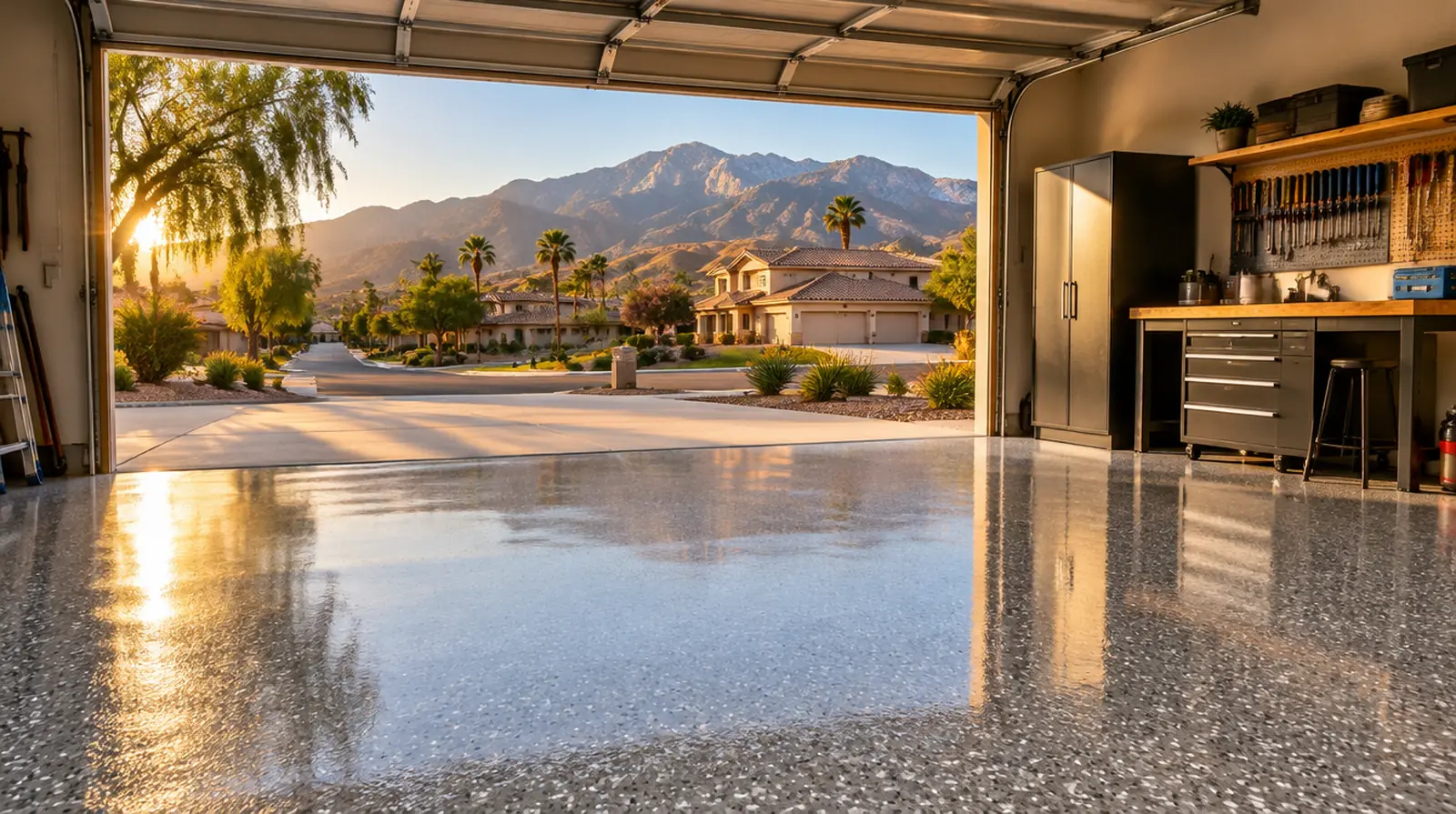
What polyaspartic is
Polyaspartic is a type of polyurea coating. It cures much faster than epoxy, often in hours instead of days, and it is aliphatic, meaning it does not yellow in sunlight. It is flexible, tough and resistant to chemicals and abrasion. Many systems use an epoxy or polyaspartic base, a flake broadcast and a clear polyaspartic topcoat.
For inland homes, polyaspartic solves two common problems. It handles direct sun through open garage doors without turning yellow, and it resists the softening that causes hot tire pickup on weaker coatings.
Benefits
Speed
Many polyaspartic floors are done in a single day. You can walk on them that evening and often park within twenty-four hours.
UV stability
Garages that face west get strong afternoon sun. Polyaspartic stays clear where standard epoxy can amber.
Temperature range
It can be installed in a wider range of temperatures, including cool winter mornings in the valley.
Toughness
It resists scratches, chemicals, oil and hot tires.
Our process
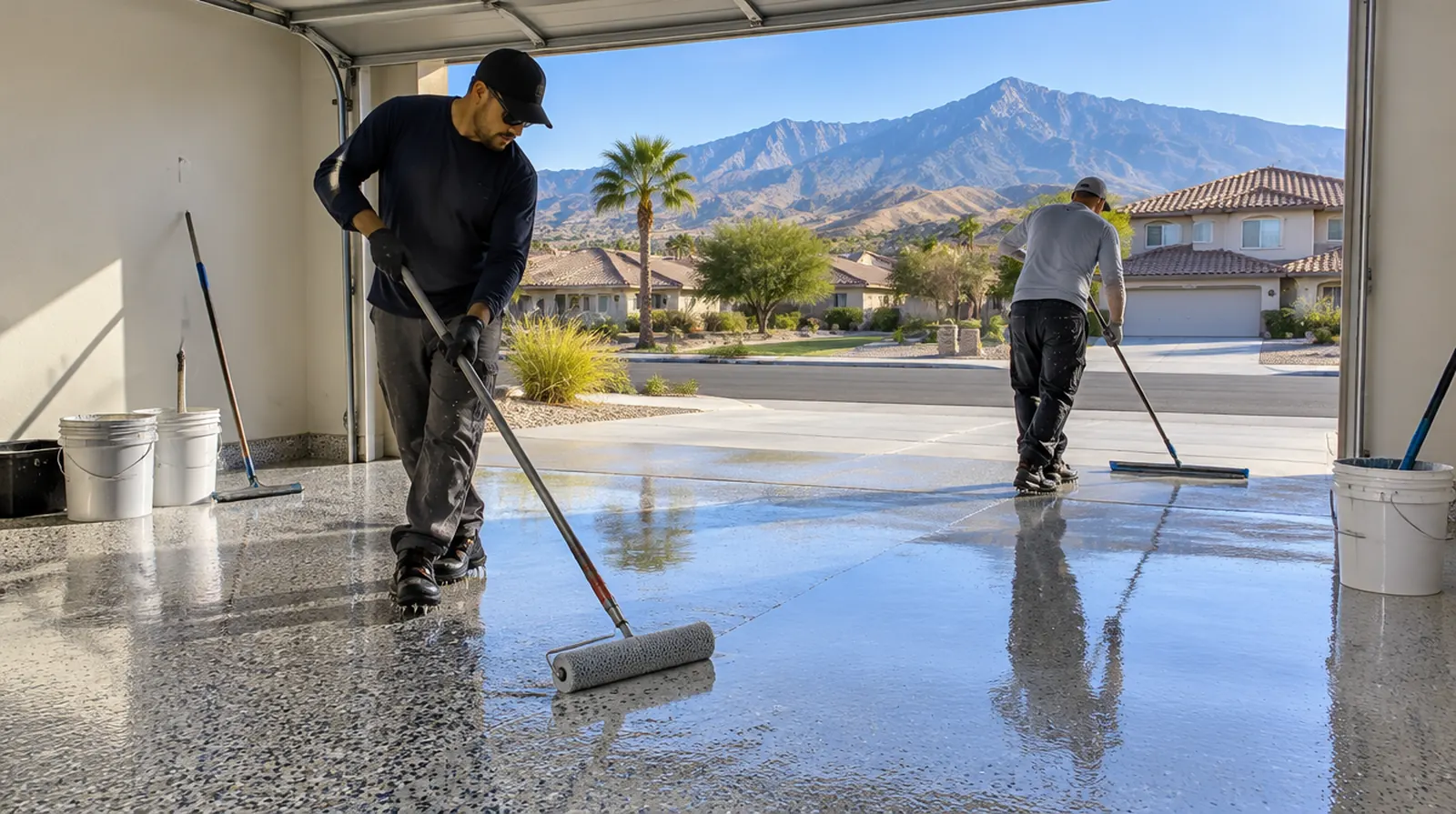
We grind the slab to open the surface and remove sealers. Cracks are repaired. A base coat goes down, often followed by a flake broadcast. After scraping and vacuuming, we apply a clear polyaspartic topcoat. Because it cures fast, we work in small sections with a trained crew to keep it smooth and even.
Working in the heat
Polyaspartic cures faster in heat, which shortens working time. On summer days we start very early, keep materials cool and mix smaller batches. This care keeps the finish free of roller marks and bubbles.
Polyaspartic vs. epoxy
Epoxy is affordable and forms a thick, hard base. Polyaspartic cures faster and resists UV and heat better. Many of our floors combine both: epoxy or polyaspartic base, flakes and polyaspartic top. We explain the pros and cons for your space.
Where to use it
Garages, patios under covers, laundry rooms, workshops, pool house floors and small commercial spaces. It works well in spaces that get sun or need quick return to service.
Prep matters more
Because polyaspartic cures so quickly, it does not soak deep into concrete the way slower products do. That makes grinding even more important. Skipping prep is the main reason some fast floors fail.
Maintenance
Sweep often, mop with mild soap and avoid harsh solvents. Put mats under kickstands and trailer jacks. The surface stays glossy for years.
Questions
Is one-day really one day?
For most garages, yes, if repairs are minor.
Does it cost more?
Usually a little more than epoxy, but it saves downtime.
Can it go outdoors?
Yes, on covered patios and some exterior areas.
Want your garage back tomorrow? Book a free estimate.
Cold mornings and winter installs
Winter in the valley brings chilly mornings, sometimes near freezing. Standard epoxy slows down dramatically in the cold and can take days to cure. Polyaspartic keeps curing at lower temperatures, so we can install it through the cooler months without long waits. That flexibility helps when you want the floor done before holiday guests arrive or before moving into a new home.
Pairing it with flake
The most popular polyaspartic system we install is a full flake broadcast with a clear polyaspartic topcoat. The chips hide dust and tire marks, the topcoat locks them in and resists UV, and the whole floor is often finished in one visit. For owners who want a smooth solid color instead, we can tint the topcoat and skip the flakes. Either way, you get a floor that shrugs off sun and heat.
What install day looks like
Our crew arrives early, sets up dust control and grinds the floor first. Repairs follow, then the base coat and flakes. By early afternoon the floor is scraped, vacuumed and topcoated. We clean up, leave written care notes and set a time to check in after you start parking on it. Because the cure is so fast, odors fade quickly and you can return items to the garage the next day. That makes polyaspartic a favorite for busy families and anyone who cannot leave a truck on the street for days.
Get a polyaspartic quote
Call (951) 618-1370 for a free estimate.