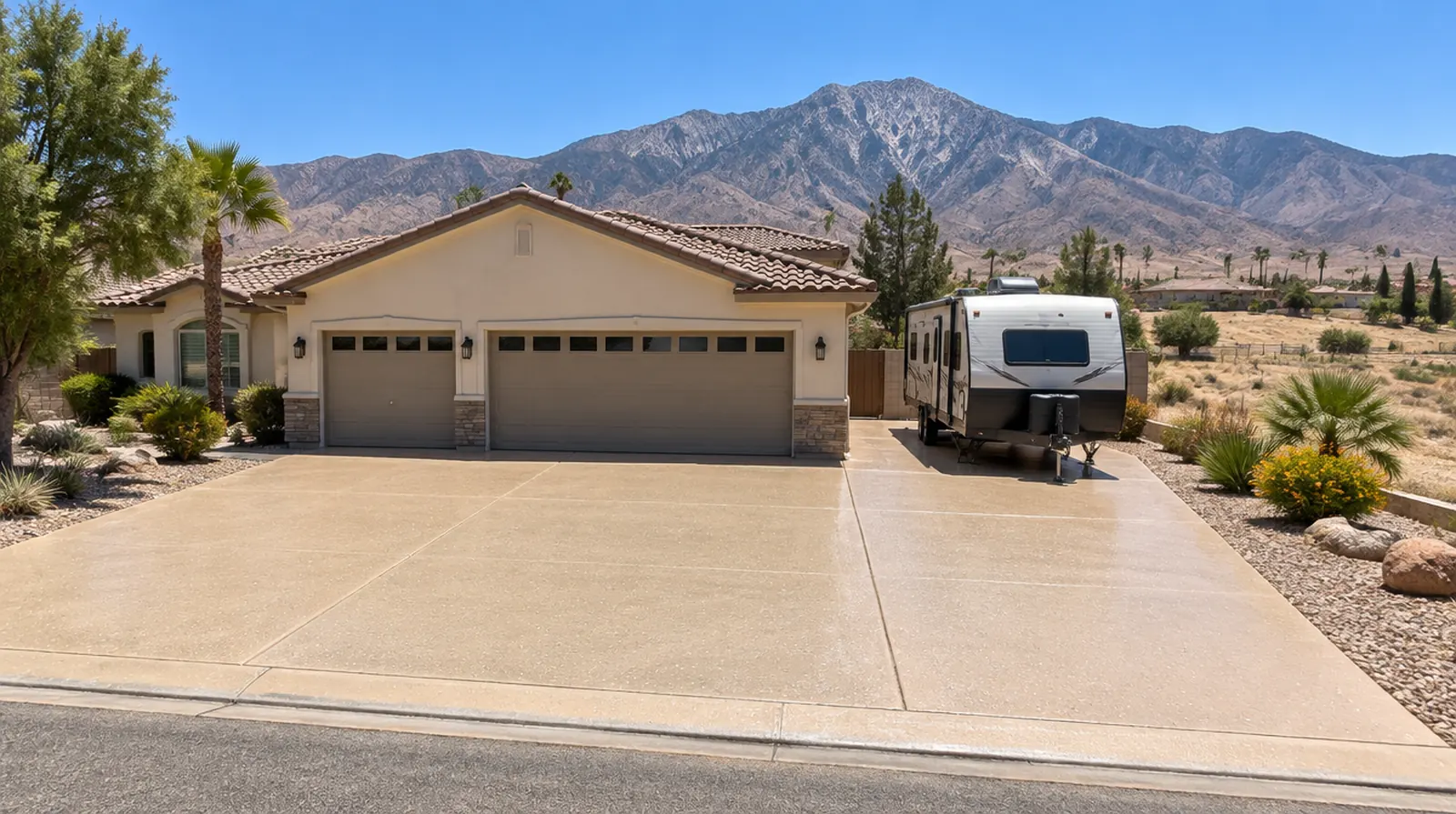
Driveways that work hard
Homes here often have wide drives, side yards and RV pads for trailers, boats and toy haulers. They take heavy loads, oil drips, sun and dust. Over time they stain, crack and wear. A coating or sealer protects them and refreshes their look.
Options
Penetrating sealers
For drives in good condition. They repel water and oil without changing the look.
Textured coatings
For worn or stained drives. UV-stable coatings with aggregate add grip and hide stains.
Resurfacing
Polymer overlays restore badly worn surfaces before sealing.
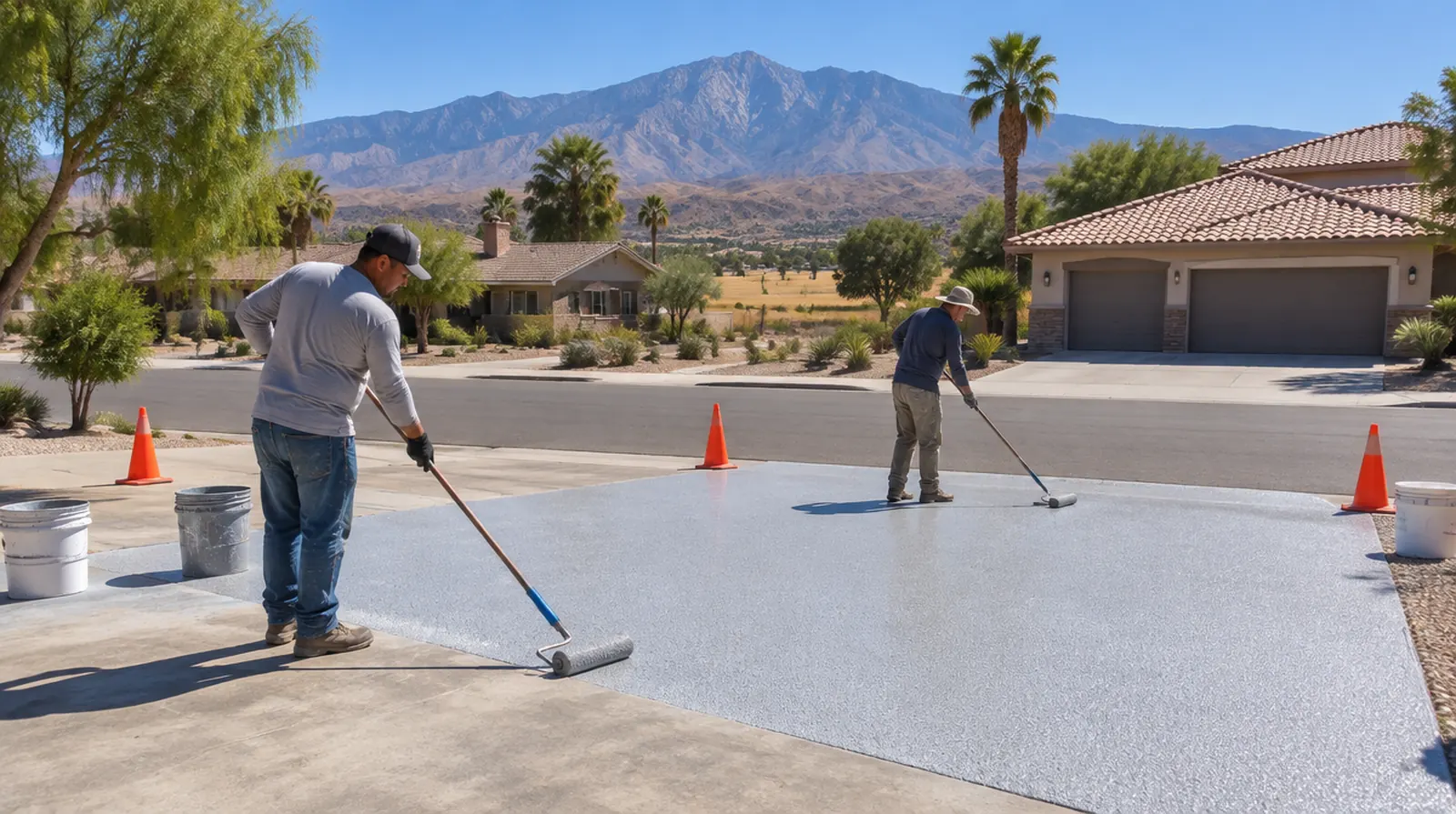
Prep
We pressure wash, degrease, treat rust and grind or blast for coatings. Cracks are filled with flexible materials and control joints are kept.
RV pads and trailers
Trailer jacks and stabilizers concentrate weight. We suggest pads under jacks and choose tougher systems for these areas.
Cooler surfaces
Light colors reflect sunlight and stay cooler underfoot, which helps pets, kids and bare feet in summer.
Oil stains
We treat stains before coating. Afterward, drips wipe up instead of soaking in.
Maintenance
Sweep and rinse regularly, clean oil quickly and reseal as needed.
Questions
Will it peel in the sun?
Not with UV-stable exterior products over proper prep.
Can you coat a cracked drive?
Yes, after repairs.
When can I drive on it?
Usually after two to three days for coatings.
Ready to refresh your drive? Book a free estimate.
Choosing a color
Light gray and tan are the most popular colors for driveways here. They reflect heat, hide dust and match most stucco homes. Darker colors look sharp but absorb more heat and show dust sooner. We bring samples so you can see them next to your home's exterior and roof tile.
Tire marks and power steering scuffs
Turning tires on hot concrete can leave black marks, especially at the apron. A good coating resists these marks better than bare concrete, and most can be cleaned with a degreaser. Avoid turning the wheel while the car is stationary on a freshly coated drive during its first weeks of cure.
Side yards and walkways
Many homes have side yards that store trailers, bins or toys. We can coat or seal those areas to match the drive, creating a clean, consistent look around the house. Walkways to the front door and backyard gates can be treated at the same time.
Cracks, joints and soils
Some parts of the valley have expansive soils that swell and shrink with moisture. That movement causes cracks in drives and walks. We fill cracks with flexible materials and keep control joints open so the slab can move. A coating cannot stop the soil from moving, but proper repairs help the surface stay intact longer.
Commercial lots and pads
We also coat small business lots, equipment pads and loading areas. Textured finishes add traction, and line striping can be included to organize parking and traffic.
Timing your project
Spring and fall are ideal for exterior coatings because temperatures are moderate. In summer we start early in the morning so the slab is cool enough for products to bond and level properly. Rain is rare most of the year, but we watch forecasts and reschedule if needed. Plan to park on the street for a couple of days while a coating cures.
Care after coating
Keep traffic off until the coating cures, then sweep regularly and rinse dust away. Use drip pans under older vehicles and clean oil spots quickly with a mild degreaser. Avoid parking hot trailers with metal jacks directly on the surface without a pad. Inspect the drive each spring for small chips and touch them up before they grow.
Why not just pressure wash?
Pressure washing cleans a drive for a few weeks, but bare concrete soaks up the next oil drip and dust storm quickly. Washing too hard can also etch the surface and expose aggregate. Sealing or coating after a deep clean locks in the results, so routine rinsing keeps the drive looking fresh for years instead of weeks.
Get a driveway estimate
Call (951) 618-1370 for a free estimate.